Anvarta Spotlight – Issue #11
Home / Newsletter Anvarta Spotlight – Issue #10 Welcome to the 11th edition of Anvarta Spotlight! With 2026 around the corner, it is time to reflect and note some of

Home / Newsletter Anvarta Spotlight – Issue #10 Welcome to the 11th edition of Anvarta Spotlight! With 2026 around the corner, it is time to reflect and note some of

Home / Newsletter Anvarta Spotlight – Issue #10 Welcome to the 10th edition of Future’s Blueprint. We’re thrilled to bring you all the latest news, insights, and updates from the

Home / Newsletter Anvarta Spotlight – Issue #9 Welcome to the latest edition of Future’s Blueprint. We’re thrilled to bring you all the latest news, insights, and updates from the

Home / Newsletter Anvarta Spotlight- Issue #6 Welcome to the latest edition of Future’s Blueprint. We’re thrilled to bring you all the latest news, insights, and updates from the industry.

Home / Newsletter The Future’s Blueprint – Issue #5 This month’s insight – Strategies for a circular economy Product Stewardship– The responsibility lays with us As a concept, product Stewardship

Home / Newsletter The Future’s Blueprint – Issue #4 This Month’s Insight – Comparative measurement for a circular economy – Tools to assess the environmental impact Lifecycle Assessment – A look

Home / Newsletter The Future’s Blueprint – Issue #3 This month’s insight – Materials for a circular economy Biochar – How it contributes to the biological cycle in a circulareconomy?

Home / Newsletter The Future’s Blueprint – Issue #2 A crisis also provides an opportunity… As economies around the world are on the verge of significant downturns, Sri Lanka issued

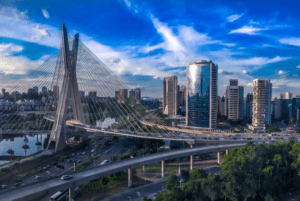
Home / Newsletter Circular Economy thinking in designing cities Cities account for over 70% of global CO2 emissions. An increase in transportation and industrial buildings emerging as prominent contributors to

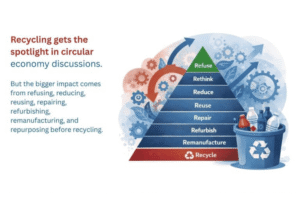
Home / Not all circular economy strategies are meant to be equal. In the transition to a circular economy, we often hear about recycling — and while it’s important, it’s

Home / “We want to go circular—but where are the options?” If you’ve tried sourcing sustainable or circular solutions lately, chances are you’ve run into this. – Limited product visibility–

Home / Some things we buy stay with us for years. Others, we use once and forget. How do we access what we require, without locking resources into cupboards, garages, or landfills?

Home / Every celebration glows bright and fades beneath what it leaves behind. Mountains of wrapping paper, ribbons, and packaging tell a quiet story of what gets unwrapped and left behind.

Home / The Rise of Shared-Use Design What if products created more value after each use, not less? Shared-use models are now emerging as a practical lever for optimising resource

Home / Why Repair Still Matters. We live in a world where upgrading feels easier than repairing. But every time we choose to fix rather than replace, we extend the

Home / Remanufacturing is a growth strategy, not a cost Remanufacturing used to be considered a niche activity—an add-on to traditional production. Today, it’s emerging as a strategic advantage for

Home / Circular Economy Is About Designing Better Systems Repair, refurbishment and remanufacturing are often seen as end-of-life solutions, but in a circular economy, they are part of a much bigger story.

Home / Circular Economy Is About Designing Better Systems Most packaging problems don’t actually start on the shop floor. They start long before that—often in rooms where decisions are made

Home / Australia’s Environmentally Sustainable Procurement (ESP) Policy is reshaping procurement by emphasizing climate action, environmental protection, and circular economy principles. Effective from 1 July 2024, the policy initially targets

Home / “Circular procurement? Sounds expensive (to consider and to work on)” That’s how you may feel – but the truth is far from this. For many teams, the move

Home / Did you know that circular procurement can enhance business competitiveness by creating resilience in your supply chain, driving innovation and designing out waste to save costs? It improves

Home / Newsletter Where are we in understanding circular procurement? If we talk about the golden key that opens the entrance to accelerating change in markets, there is one we

Home / We’ve talked about decarbonisation, and also about a circular economy “But, internally driving these are not enough” “We need to also purchase solutions that actively drive these!” If you’re actively

Home / We can’t afford to shift what we procure to buy sustainable or circular products when we hear this, the real underlying question is: Can we afford not to? Most procurement teams get stuck

Home / We want to be sustainable – right? Let’s move away from plastic We see this a lot in packaging decisions: teams assume that choosing a material perceived as sustainable automatically

Home / Moving from reactive fixes to structured decision pathways – Why packaging needs foresight, not constant fixes Many packaging changes today are driven by immediate triggers, – New regulations

Home / Packaging is not a materials decision, but a system choice Packaging decisions are often treated as technical or material choices – Plastic versus paper – lighter versus heavier

Home / We’re Excited to Share the News! Anvarta is proud to announce our strategic collaboration with the United Nations Global Compact Network Sri Lanka — working together to help

Fact Sheets Here is how the new Australia’s Circular Economy Framework would work. Australia’s Circular Economy Framework 2024 marks a significant shift in how resources, waste, and value are

INSEE Ecocycle Lanka (Pvt) Ltd., is a fully owned subsidiary of Siam City Cement (Lanka) Limited (a member of the INSEE Group, Thailand) and holds the unique position as Sri

We often drift to purchasing something new and shiny, fresh off the shelves, when we think of buying something. Retail and advertising industry techniques are also made to influence us

Gift-giving has been an age-old practice and has evolved to fit different traditions and cultural norms over time. They were given on special occasions to display one’s affection or as

“You’ll Own Nothing and You’ll Be Happy,” A statement in an essay by Danish MP Ida Auken sparked countless debates about a dystopian future looming on the horizon. Yet we

We dread to have our favorite kettles, toasters, mixers, or irons broke. Not only is it hard to repair them, having to let go of something that we liked and

Dinner sets, tea sets, cutlery, plates, and dishes – You may have received them as a gift or purchased them at your fancy, yet one common thing is that they