
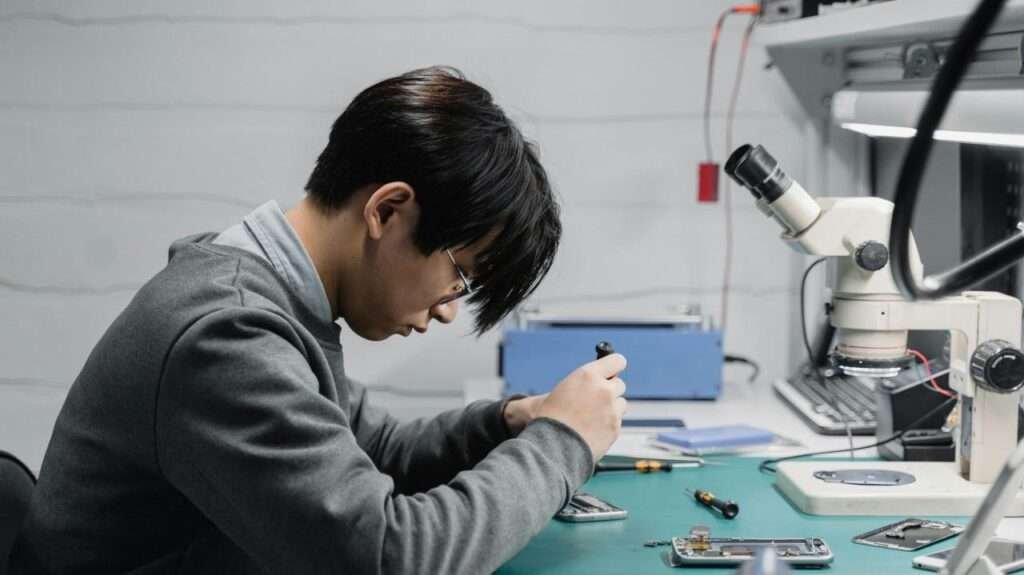
How many of us reach the point where our well-functioning kettle or toaster (or even washing machine or oven) is suddenly out of order—and all we really want is for it to be repaired?
This is not the same as looking to replace what we have with a novel item. And it is also not the case where we want something better and are looking to upgrade. This is the case where we are very happy and settled with what we were using, but unfortunately, it is no longer working (or a part is broken, and it only functions properly with that part).
Let’s call this Case #1.
There is also a Case #2 in this narrative.
Case #2 is when I am looking for something that simply does the job. Say I am looking for a coffee machine, when I am not a very regular coffee drinker, or perhaps I am coffee-curious.
I want an initial entry into the experience of the product, like an amateur photographer buying their first DSLR camera. I am very happy with a basic product and a relatively low entry price to experience it before committing further.
In terms of features and sophistication, I am quite comfortable with what it offers; the basics are very much okay to settle with.
In both of these instances, needs point in one direction, and there are some common elements.
What is the common element that I am consciously (or subconsciously) asking here? And that is the element we seek as a supplementary service here, which act as an enabler or deterrent to my buying of these.
Assurance, guarantee, warranty, certification, endorsement—we can name it in different ways. But we need someone to give us peace of mind that we are dealing with something sound: an imperfection we know how to manage, rather than a broken machine that becomes a liability.
Everything I have described so far leads to one discussion: we need service sectors built up to support a circular economy, and those service sectors demand other peripheral services to minimise or eliminate the fears of consumers and buyers.
Parties undertaking checks, validations, or certifications; parties providing guarantees and warranties; and if everything fails, parties providing insurance and liability-management procedures.
When we travel to a faraway location, and we hire a car in that faraway locality, we generally pay an insurance with the hire company which covers liabilities in an accident. Some of us often we pay an additional insurance that reduces the exorbitant excess that we have to pay to the original insurer, if the car is damaged—essentially an insurance on top of an insurance. That layered protection gives us the security and peace of mind to hire and drive a car in an unknown territory.
The narratives of Case #1 and Case #2 are the same. We expect consumers to embark on an unknown journey and take risks on semi-known or unknown products. But do we give them the right level of assurance that their decision to undertake repair or purchase refurbished or serviced products is actually worth it?
We have good intentions, but shouldn’t do we do much more to fill gaps of services that make some of parts of a circular economy a clear go or no-go, if we want it to truly function?
Love to hear your thoughts or comments …